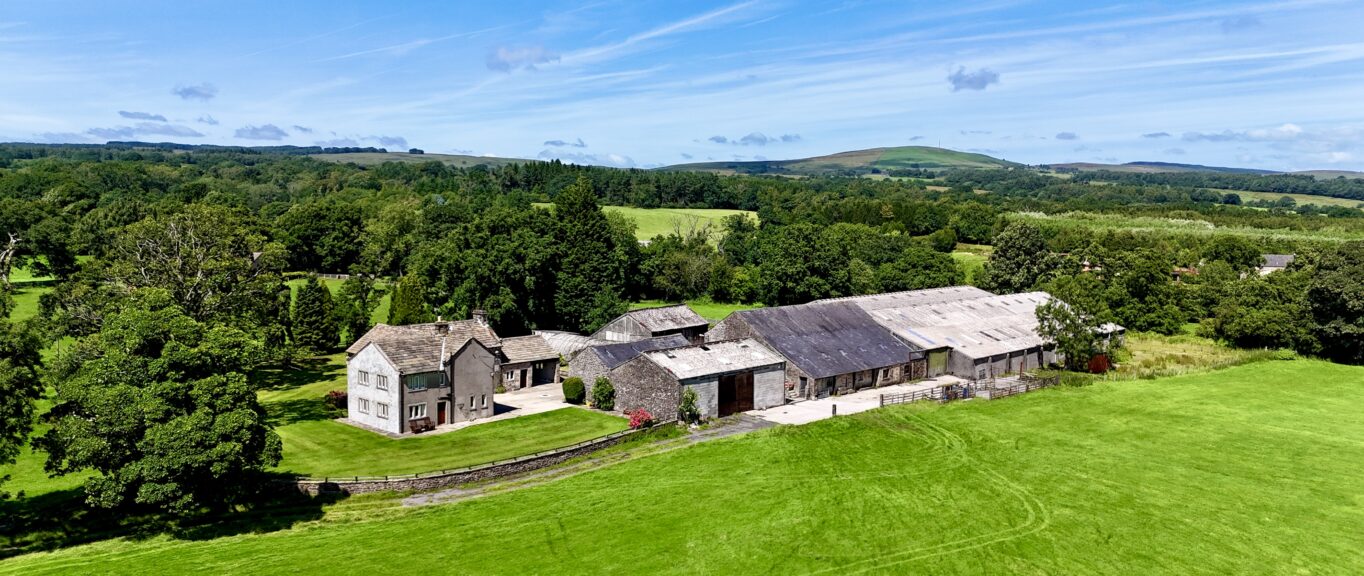
Agricultural Land Market Trends North West England
The agricultural land market across the North West continues to demonstrate resilience despite an increasingly challenging economic backdrop for many farming businesses. While demand remains generally robust, buyer sentiment is becoming more selective as different sectors of the agricultural industry face varying financial pressures.
For several years, the dairy sector has been one of the key drivers of agricultural land values throughout the region. Strong milk prices, coupled with a desire among established dairy businesses to secure additional acreage for forage production, slurry management and herd expansion, created significant competition for both bare land and equipped farms. In many cases, progressive dairy operators were among the most aggressive purchasers in the market, helping to underpin values across large parts of Lancashire, Cheshire and Cumbria.
However, the landscape is beginning to shift. Following a period of exceptional returns, milk prices have softened, whilst input costs remain stubbornly high. Although many dairy businesses remain profitable, margins have tightened considerably compared to recent years. As a result, some operators are becoming more cautious when considering land acquisitions, with greater scrutiny being applied to both purchase price and long-term return on investment. This is not to suggest demand has disappeared; rather, the market is witnessing a more measured approach from a sector that has previously been a major source of competitive bidding.
The livestock sector more broadly continues to provide steady support to the market. Beef and sheep enterprises have generally benefited from stronger livestock values in recent years, although ongoing uncertainty surrounding agricultural support schemes and environmental policy remains a consideration for many prospective purchasers. Expansion opportunities are still being pursued where holdings are strategically located, particularly where land adjoins existing farming operations.
The arable sector presents a mixed picture. Commodity prices have retreated from the highs experienced following global supply disruptions, while production costs and volatile weather conditions continue to impact profitability. Buyers are increasingly focused on land quality, drainage, access and long-term productivity, with average or marginal arable land attracting more selective interest.
Beyond traditional farming sectors, amenity and lifestyle purchasers continue to play an important role in the market. Well-located pasture land close to towns, villages and affluent rural communities remains highly sought after. Demand from equestrian buyers, private individuals seeking environmental projects, and those looking to secure land for long-term investment continues to support values in certain locations. In many instances, amenity purchasers are outbidding commercial farming interests, particularly for smaller parcels of pasture with road frontage, attractive surroundings or future diversification potential.
Environmental and natural capital opportunities are also increasingly influencing market activity. While many schemes remain in their infancy and policy direction continues to evolve, there is growing interest from landowners exploring options relating to biodiversity enhancement, carbon sequestration and habitat creation. These opportunities are not yet the primary driver of land values in the North West, but they are becoming an increasingly important consideration for both buyers and sellers.
Looking ahead, the supply of agricultural land remains relatively limited, which continues to support the market despite softer conditions in some farming sectors. Quality farms and productive blocks of land are still attracting strong interest where location, scale and accessibility align with purchaser requirements.
Overall, while the exceptional market conditions experienced over recent years may be moderating, the North West agricultural land market remains fundamentally sound. Demand continues to be underpinned by a combination of commercial farming businesses, private investors and lifestyle purchasers, providing a broad base of support for land values across the region.








Thank You
Thank you for contacting us, a member of our team will be with you shortly.