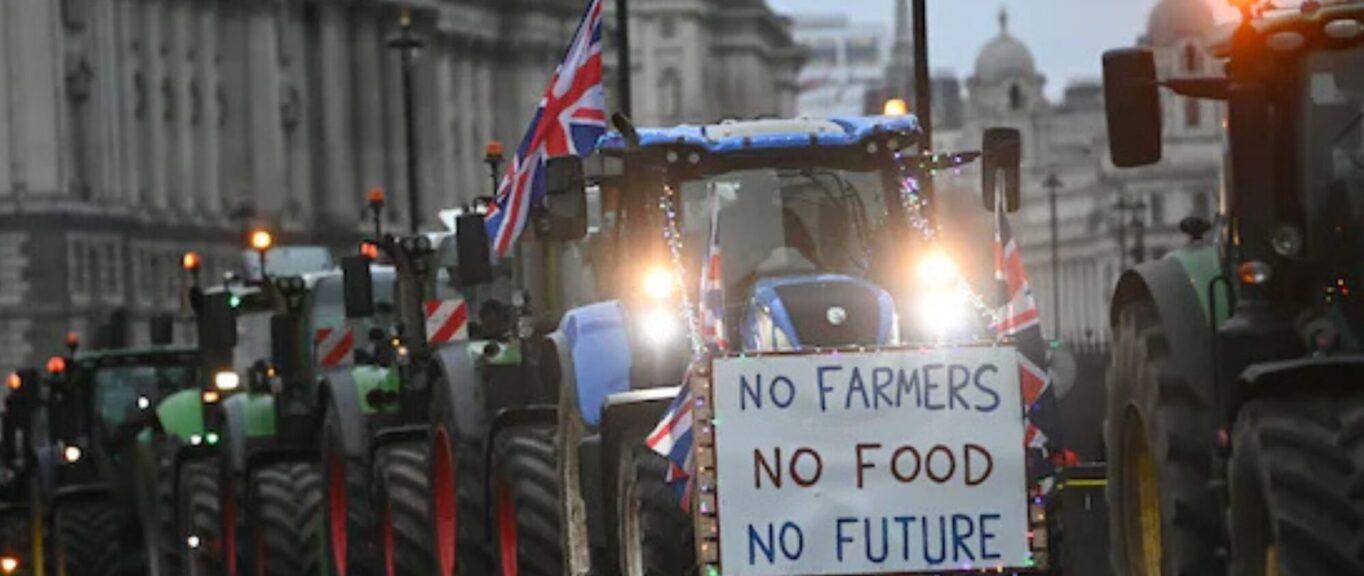
Inheritance Tax Reforms: Government Raises Relief Cap but Key Changes Remain for Farming Sector
The UK Government’s announcement, on 23 December 2025, to increase the cap on 100% inheritance tax relief for agricultural and business assets from £1 million to £2.5 million per individual has been widely welcomed across the rural sector. The decision, introduced under Chancellor Rachel Reeves, marks a significant revision to earlier proposals.
Industry bodies, including the Country Land and Business Association, played a prominent role in lobbying for the change, raising concerns over the initial rollout and warning it did not fully reflect the structure and financial realities of UK farming.
Despite this adjustment, these reforms to inheritance tax (IHT) are still set to come into effect from April 2026, leaving significant implications for how agricultural land and farm businesses are passed to the next generation.
Under the existing framework, qualifying agricultural land and farm assets could benefit from up to 100% relief through Agricultural Property Relief (APR). In addition, Business Property Relief (BPR) often applied to livestock, machinery, and other business assets without an upper limit has 100% relief currently.
This combination allowed many farming families to transfer assets across generations without incurring significant inheritance tax liabilities, helping to preserve family-owned farms.
From April 2026, a combined cap will apply to APR and BPR:
- The first £2.5 million of qualifying agricultural and business assets will continue to receive 100% relief.
- Any value above £2.5 million will qualify for 50% relief.
As a result, assets exceeding the threshold may become subject to inheritance tax, where previously full relief was available.
For married couples or civil partners, allowances can be combined, allowing up to £5 million of qualifying assets to be passed on free from inheritance tax.
The impact of these changes will vary depending on the size and structure of farming businesses. Smaller family farms may see limited effects. However, larger or diversified enterprises -particularly those with high-value land, buildings, or equipment – may exceed the new threshold.
For example, in the case of a single owner:
- Farm land and buildings valued at £3 million, with agricultural assets (such as livestock and machinery) worth £500,000
- £2.5 million would remain tax-free
- £1 million would be partially taxed at an effective rate of 20%
- This could result in an inheritance tax liability of around £200,000.
Additional Considerations:
Land entered into environmental schemes will continue to qualify for relief.
Any inheritance tax liability can be paid in instalments over a 10-year period.
The new cap applies to the combined value of agricultural and business property relief.
The revised framework places greater emphasis on the valuation of both “live” and “dead” stock, including livestock and machinery. As farm businesses have expanded and modernised, these assets have grown significantly in value.
Previously, such items were often fully covered under uncapped BPR. Under the new system, however, their inclusion within the £2.5 million cap means they may push total asset values above the relief threshold. Accurate and up-to-date valuations will therefore become increasingly important for farm businesses planning succession. Here at Armitstead Barnett, we have experts within the team with the knowledge and experience in both land / farm valuations and live / dead stock valuations, allowing a full farm assessment.
These reforms represent a notable shift in inheritance tax policy for the agricultural sector, introducing a cap on relief for the first time. As a result, forward planning and professional advice will be essential for farming families seeking to manage future tax liabilities and ensure the smooth transfer of assets between generations.









Thank You
Thank you for contacting us, a member of our team will be with you shortly.